

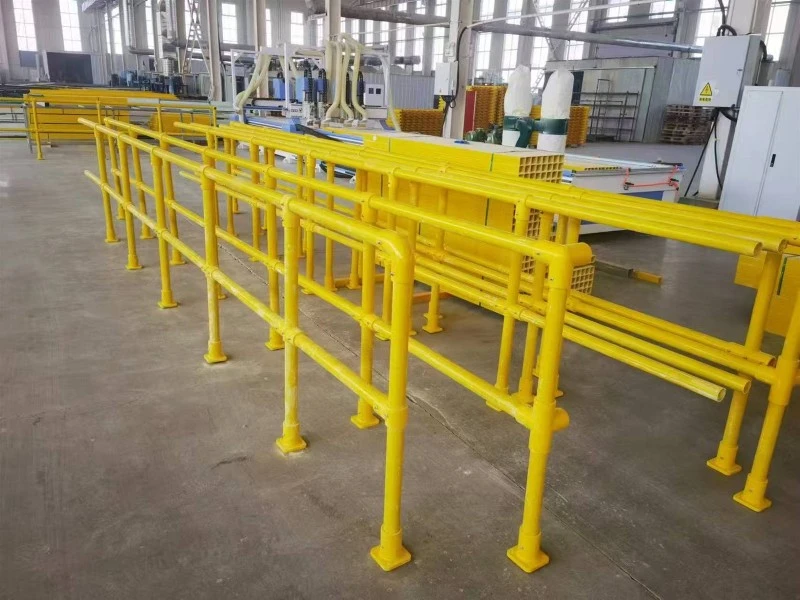
What Are FRP Handrail Profiles?
FRP (Fiberglass Reinforced Plastic) handrail profiles are structural components made from a combination of resin and glass fiber, designed to provide strong, lightweight, and corrosion-resistant support systems. These profiles are widely used in industrial settings as guardrails, stair railings, safety barriers, and platforms, replacing traditional materials like steel, aluminum, or wood.
Unlike metal handrails, FRP profiles do not rust, conduct electricity, or require frequent repainting. Their non-conductive and corrosion-resistant properties make them an ideal solution in chemical plants, wastewater treatment facilities, marine environments, and power stations.
Why Are FRP Handrails Gaining Popularity?
Corrosion Resistance
One of the key advantages of FRP handrails is their resistance to harsh environmental conditions, including chemicals, moisture, and UV exposure. This makes them perfect for both indoor and outdoor applications where traditional materials might degrade quickly.
Lightweight and High Strength
Despite their light weight, FRP profiles offer impressive mechanical strength and structural stability. This makes installation easier and reduces labor costs without compromising on performance.
Low Maintenance
Unlike steel, FRP handrails do not require galvanizing or repainting. Their color is molded into the material, which keeps them looking fresh for years with minimal upkeep.
Electrical and Thermal Insulation
As a non-conductive material, FRP provides excellent safety in environments with electrical equipment or high temperatures. It also remains cool to the touch, even under sunlight, making it user-friendly in public spaces.
Common Applications
FRP handrail profiles are used across a wide range of industries and infrastructure projects, including: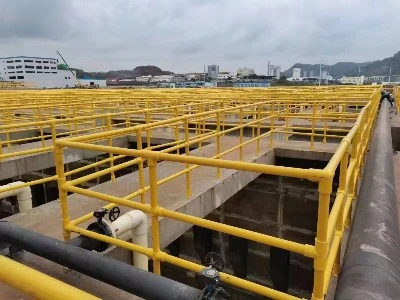
Water and Wastewater Treatment Plants
For walkways, access platforms, and chemical handling areas.
Chemical Processing Facilities
To withstand aggressive environments without corroding or failing.
Power Plants and Substations
Providing safe, insulated handrail systems near high-voltage equipment.
Marine and Offshore Platforms
Ideal for docks, ships, and oil rigs due to excellent saltwater resistance.
Public Infrastructure
Including pedestrian bridges, highway barriers, stair rails in metro stations, and safety fences along railways.
Customization and Design Flexibility
FRP handrail systems are available in various profiles, colors, and finishes. At Hebei Leihong Fiberglass Technology Co., Ltd., we provide:
Round and square tubes, angle bars, and connection components
Modular systems that can be assembled on-site or delivered pre-fabricated
Custom colors (e.g., yellow, grey, green) for safety visibility or project matching
Anti-slip coatings or added UV resistance as needed
Our team supports tailored solutions to match your project requirements while maintaining high safety and engineering standards.
Conclusion
FRP handrail profiles represent a shift towards smarter, safer, and more durable construction in industrial and public infrastructure. With their impressive blend of strength, durability, and safety features, they are rapidly becoming the material of choice for modern handrail systems.
To learn more about FRP profiles or to get a quote tailored to your project, contact our team at Hebei Leihong today.