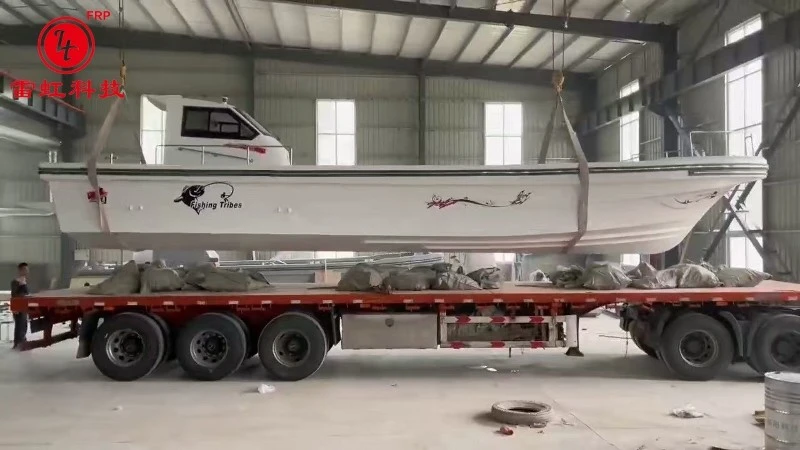
In the world of maritime transportation, the choice of boat materials significantly impacts performance, maintenance, and overall cost. Fiber Reinforced Polymer (FRP) boats have become increasingly popular due to their exceptional properties. To better understand their advantages, it's useful to compare FRP boats with those made from other common materials such as wood, aluminum, and steel.
1. Durability and Corrosion Resistance
FRP boats are renowned for their durability and resistance to corrosion. Made from a composite of glass fibers and resin, FRP is inherently resistant to the elements, making it less prone to degradation compared to wood. Unlike wooden boats, which can suffer from rot, mold, and insect damage, FRP boats maintain their integrity over time, even in harsh marine environments.
In comparison to aluminum boats, FRP offers better resistance to scratches and dents. While aluminum is lighter and can be more easily shaped, it is more susceptible to surface damage from impacts. On the other hand, steel boats, though very sturdy, are highly prone to rust and corrosion, especially when exposed to seawater. FRP boats require significantly less maintenance to address these issues.
2. Maintenance and Cost
The maintenance requirements for FRP boats are notably lower than those for wooden, aluminum, or steel boats. Wooden boats demand regular varnishing, sealing, and inspection to prevent decay and maintain their appearance. Aluminum boats, while less maintenance-intensive than wood, still require periodic checks for corrosion and may need anodizing to extend their lifespan.
Steel boats, though durable, often require extensive maintenance to combat rust, including frequent painting and coating. FRP boats, by contrast, need minimal upkeep. Their smooth surfaces resist fouling, and any repairs can be performed relatively easily and cost-effectively.
3. Weight and Fuel Efficiency
FRP boats are significantly lighter than their steel counterparts, which enhances their fuel efficiency and performance. The lightweight nature of FRP improves speed and maneuverability, leading to lower fuel consumption. This advantage makes FRP boats particularly attractive for commercial shipping and recreational boating where efficiency is crucial.
Aluminum boats also benefit from a lighter weight compared to steel, but they can be more expensive than FRP boats. While aluminum provides good strength-to-weight ratio, FRP often strikes a better balance between performance and cost. Wooden boats, being the heaviest of the materials discussed, tend to have lower fuel efficiency and are less favored for modern, efficiency-focused applications.
4. Environmental Impact
From an environmental perspective, FRP boats present a mixed picture. While they reduce the need for frequent maintenance and repainting, which can be harmful to marine ecosystems, the production and disposal of FRP materials involve significant environmental considerations. In contrast, wooden boats are biodegradable, although the logging and treatment processes can have their own environmental impacts.
Conclusion
FRP boats stand out in the maritime industry due to their durability, low maintenance needs, and efficiency. Compared to wooden, aluminum, and steel boats, FRP offers several benefits that align well with contemporary shipping needs. However, each material has its unique characteristics and drawbacks, making the choice of boat material dependent on specific requirements and preferences. As technology advances, the ongoing evolution of materials promises even greater innovations in boat design and performance.