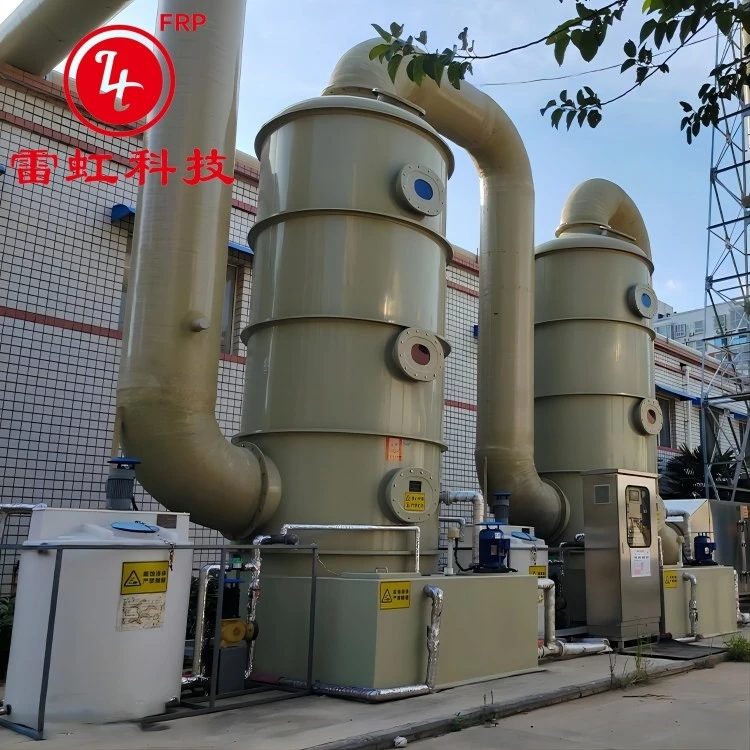
The gas purification tower has a packing layer structure and (specialized in various VOCs control RTO, RCO, CO, condenser, spray tower, activated carbon/resin/zeolite adsorption and desorption, etc.), and a cyclone layer structure with two different principles. The packing layer and swirl plate in the tower body are the basic components for gas-liquid contact. The two structures are different, and the types of waste gas treated are also different. After the gas outside the tower body enters the tower body, the gas enters the packing layer or swirl flow. There is a spray liquid from the top and the front spray liquid on the filler layer, and a liquid film is formed on the filler. When the gas flows through the gap of the filler, it contacts the filler liquid film and undergoes absorption or neutralization reaction. The packing layer can provide a large enough surface area without causing excessive resistance to gas flow. The absorbed or neutralized gas is collected by the demister and discharged out of the tower through the air outlet.
The cyclone purification tower uses the contact between gas and liquid to transfer pollutants in the gas to the liquid, and then separates the clean gas from the contaminated liquid to achieve the purpose of purifying the air. The waste gas passes through the cyclone purification tower and is treated by gas-liquid reverse absorption, that is, the absorption liquid is sprayed down in the form of mist from top to bottom. The exhaust gas moves upward from the bottom of the tower (gas-liquid reverse direction) to achieve gas-liquid contact. This treatment method can cool the exhaust gas, condition the gas and remove particles, and then discharge it into the atmosphere after being treated in the defogging section.