

Molded grating and extruded grating are two common types of fiberglass grating, each with distinct differences in production processes, structural characteristics, and application areas. This comparison will explore multiple dimensions and provide recommendations for selection.

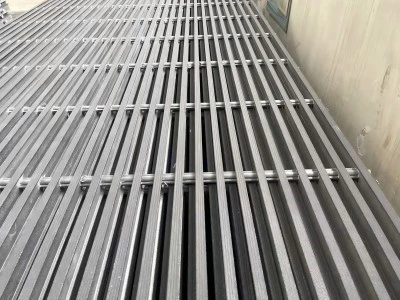
1. Differences in Production Processes
Molded Grille
Adopting the integral molding process, glass fibers and resin are mixed and pressed into shape in a single operation using a mold.
Glass fibers are woven in a cross-weave pattern, creating an equidistant grid structure that exhibits bidirectional force characteristics.
Pultruded Grille
Adopting continuous extrusion molding technology, glass fiber bundles are aligned in a single direction and continuously formed using extrusion equipment.
The fiber direction is typically single (usually longitudinal), making it more suitable for unidirectional forces.
2. Differences in Structural Characteristics
Molded Grille
The grille features a uniform grid structure that possesses a robust bidirectional load-bearing capacity.
The surface typically features a sandy texture, a smooth finish, or a sand layer, all of which provide excellent anti-slip performance.
Thick (typically ranging from 25 mm to 50 mm), suitable for large-scale load-bearing applications.
Pultruded Grill
The grille is constructed from extruded profiles, such as I-shaped and rectangular sections, which are spliced together to primarily support longitudinal loads.
The surface is relatively smooth; however, the anti-slip properties can be enhanced through post-treatment.
Thin profile, high strength, suitable for linear load-bearing applications or use in narrow areas.
3. Performance Comparison
|
Performance Indicators |
Molded Grille |
Pultruded Grille |
|
Force Direction |
Bidirectional Bearing
|
Unidirectional Load-Bearing |
|
Strength
|
Strong overall rigidity and excellent impact resistance. |
High strength, suitable for linear high-load applications. |
|
Weight |
Heavier |
Lighter |
|
Anti-Slip Performance |
Excellent anti-slip performance |
Slightly inferior to molded grating |
|
Corrosion Resistance |
Excellent |
Excellent |
|
Size Flexibility |
One-piece molding, large dimensions, suitable for large-area coverage |
Splicing extruded profiles enables flexible length design as required |
|
Appearance
|
The overall grid is uniform and is typically covered with sand or smooth surfaces |
A linear structure can be processed later based on demand |
4. Price Comparison
The manufacturing process for molded grilles is straightforward, and the associated costs are relatively low.
Due to the use of complex extrusion equipment and stringent process requirements, the cost of pultrusion grilles is typically higher.
5. Specific Uses and Selection Recommendations
Applicable Scenarios for Molded Grilles:
Molded grilles are ideal for applications where the load-bearing capacity is moderate, and strong anti-slip properties or good impact resistance are necessary.
Common Applications:
Chemical plant floors and walkways should be corrosion-resistant, slip-resistant, and safe.
The cover plate for the sewage treatment plant offers excellent anti-slip performance, making it suitable for wet and slippery environments.
The ship deck is designed for occasions that require high anti-slip performance.
Large area ground coverage includes work platforms and operational zones.
Applicable Scenarios for Pultruded Grilles:
Pultruded grilles are ideal for high-strength linear load-bearing and lightweight applications, particularly in confined spaces or under significant loads, where they demonstrate exceptional performance.
Common Applications:
Stair treads: Ideal for stair components that demand both high strength and lightweight properties.
The cable trench cover plate features a robust linear load-bearing capacity, making it suitable for use in narrow trench areas.
The platform guardrail system is lightweight, easy to install, and suitable for high-altitude platforms.
Overloaded environments, such as the load-bearing channels surrounding industrial equipment, can lead to significant structural issues.
6. Recommendations for Selection
When choosing between molded and extruded grilles, it is important to consider the specific usage and environmental requirements of the application.
For occasions when molded grilles are preferred:
- If large-scale coverage and bi-directional force are required,
- The environment is damp and slippery, necessitating high standards for anti-slip performance.
- Due to a limited budget, an economical and practical solution is required.
- Priority should be given to situations involving extruded grilles.
- The load-bearing demand is significant and concentrated in a single direction.
- We require lightweight and easy-to-install materials.
- Used in confined spaces, such as grooves and pedals, or in situations with specific design requirements.
Both molded and extruded grilles offer distinct advantages, and the selection process should consider factors such as application scenarios, load-bearing requirements, anti-slip performance, and budget. If the requirements are general and the budget is limited, a molded grille is the better choice. Conversely, if high-strength linear load-bearing or a lightweight design is necessary, a pultruded grille provides greater advantages.