↵
As industries increasingly demand high-performance, corrosion-resistant, and low-maintenance materials, FRP (Fiberglass Reinforced Plastic) pipes and fittings have emerged as a reliable alternative to traditional steel, PVC, and concrete piping systems. Commonly used in chemical plants, wastewater treatment facilities, desalination systems, and power plants, FRP piping offers a unique combination of strength, durability, and chemical resistance.
What Are FRP Pipes and Fittings?
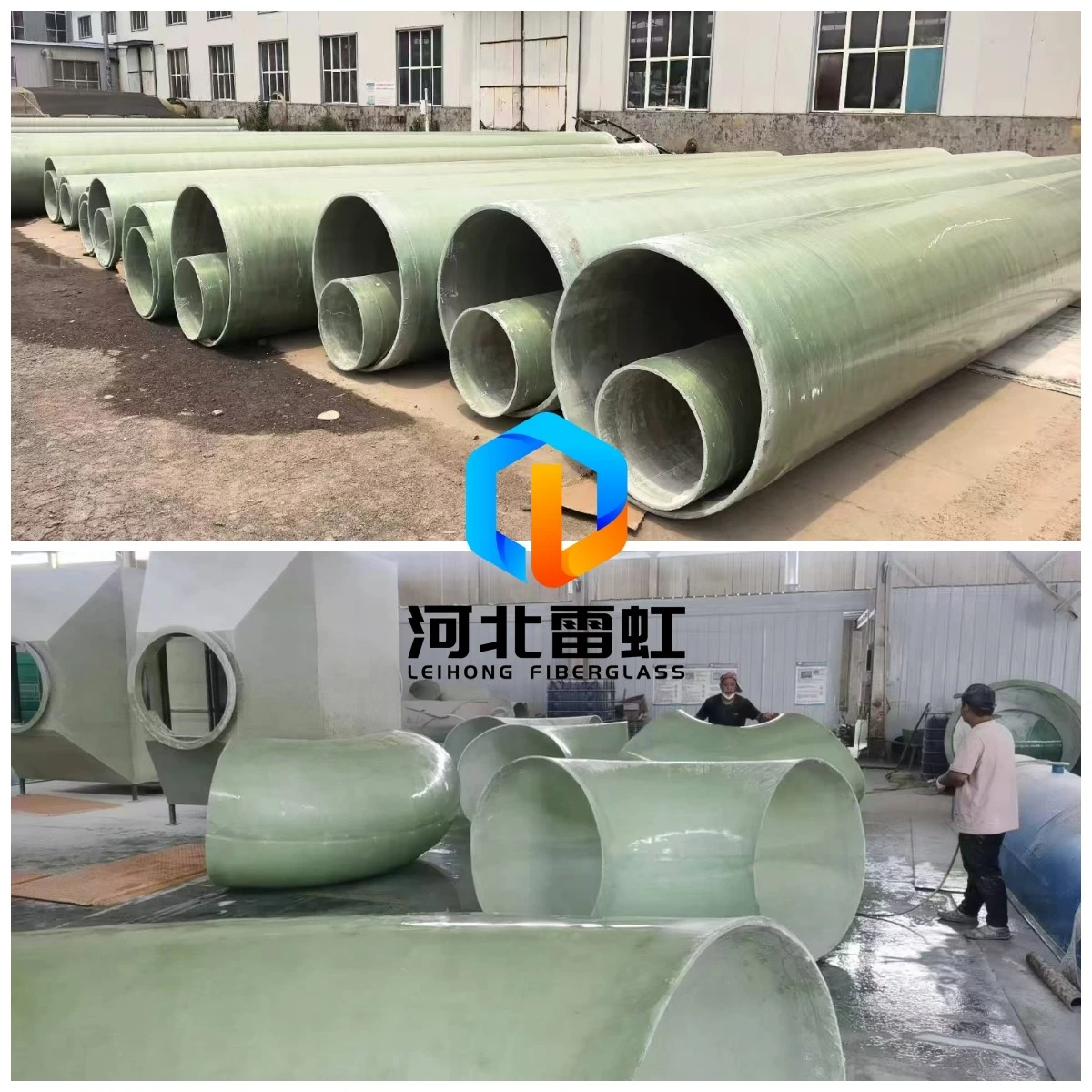
FRP pipes are made by reinforcing thermosetting resins (such as epoxy, vinyl ester, or polyester) with continuous glass fiber. They are produced through processes like filament winding, centrifugal casting, or hand lay-up. Fittings-including elbows, tees, reducers, flanges, and couplings-are also manufactured using molded or laminated methods to ensure seamless integration into the piping network.
Why Choose FRP Over Traditional Materials?
Compared to metal or plastic piping, FRP offers several distinct advantages:
- Outstanding corrosion resistance: FRP does not rust, decay, or degrade when exposed to acids, alkalis, salts, or moisture.
- Lightweight and easy to install: Its weight is about 1/4 that of steel, reducing transport and installation costs.
- Long service life: In harsh environments, FRP systems can last 20–50 years with minimal degradation.
- High mechanical strength: Capable of handling high pressure and temperature fluctuations.
- Low thermal conductivity: Improves energy efficiency in hot or cold fluid applications.
- Customizable properties: Different resin systems and glass structures can be tailored to meet specific project needs.
Key Applications
FRP piping systems are suitable for a wide range of industrial and municipal applications, such as:
- Industrial wastewater discharge pipelines
- Chemical processing plants (acid and alkali transport)
- Cooling water systems in power stations
- Desalination and brine pipelines
- Sewage treatment and drainage systems
- Marine and offshore platform piping
- Ventilation ducts for corrosive gases
-
Fittings for a Complete System
To ensure reliability and leak-free operation, FRP fittings are carefully designed to match the pipe size and mechanical performance. Common types include:
- Elbows (45°, 90°) – for directional changes
- Reducers – to transition between different diameters
- Tees and Crosses – for branch lines
- Flanges – for secure, detachable connections
- Couplings and end caps – for joining and sealing ends
All fittings are designed for uniform mechanical behavior and corrosion resistance, matching the pipe in structure and material.
Conclusion
With growing environmental regulations and the need for long-lasting infrastructure, FRP pipes and fittings are becoming the material of choice for engineers and designers worldwide. Their corrosion resistance, long life cycle, and design flexibility offer a sustainable and cost-effective solution in the most demanding industries. Hebei Leihong Fiberglass Technology Co., Ltd. provides a full range of custom FRP piping systems and accessories, ensuring reliability, safety, and performance for your critical operations.