

In practical applications, the choice between molded and pultruded gratings primarily depends on the specific usage scenario and requirements. The following summarizes the typical scenarios in which molded gratings are preferred:
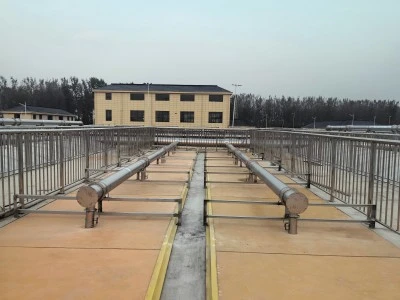
1. Locations with High Anti-Slip Requirements
The surface of the molded grating can be designed with either an anti-slip sand texture or a patterned finish, both of which provide excellent anti-slip performance, making them suitable for wet or ice-prone environments.
Typical Scenario:
Wastewater Treatment Plant: Utilized for Operating Platforms and Trench Covers.
To prevent slip accidents caused by liquid leakage in chemical plants.
To prevent slippery surfaces on the ship deck from posing a safety threat to personnel.
2. Locations Capable of Accommodating High Demand
The molded grating features bidirectional load-bearing capacity, uniform force distribution, and is suitable for large-scale installations.
Typical Scenario:
An industrial platform refers to the operational area surrounding large equipment.
Municipal engineering involves the installation of protective panels around pedestrian walkways and manhole covers.
3. Wet and Corrosive Environment
The molded grating performs exceptionally well in high humidity and highly corrosive environments, and it is resistant to rust.
Typical Scenario:
Electroplating Workshop: Exceptional Resistance to Acids and Alkalis.
The area surrounding the cooling tower is resistant to moisture and corrosion.
Food Processing Plants: Preventing Metal Rust from Contaminating Food
4. Projects with a Limited Budget
The production process for molded gratings is straightforward, and the costs are relatively low, making it suitable for budget-sensitive projects.
Typical Scenario:
Initial construction projects, such as material selection for temporary platforms or transitional structures, are crucial for ensuring safety and efficiency.
Economic Renovation Project: Simple Replacement of Old Facilities
5. Locations with Strict Fire Prevention Regulations
Molded gratings can meet flame retardant requirements through specialized formulations, making them suitable for environments that require fire resistance.
Typical Scenario:
The underground parking lot passage is designed to prevent the spread of fire.
High-risk industrial areas, such as oil refineries and organic chemical workshops, require special attention and safety measures.
In summary, when large-scale coverage, bi-directional force, exceptional anti-slip performance, and a limited budget are necessary, molded gratings are the superior option. They are particularly well-suited for humid and highly corrosive environments, such as chemical plants, sewage treatment facilities, and food processing sites.